Build the Roadster First
Tesla's master plan is usually read as a pricing strategy. There's a product architecture lesson hiding inside it.
Notes on engineering organizations, AI-native development, and building things that last.

Tesla's master plan is usually read as a pricing strategy. There's a product architecture lesson hiding inside it.

Three pricing events in three months look like AI getting expensive again. They're not. The market is splitting in two - and where you build matters more than what you pay.

Formula 1 fans have argued for 40 years about who was better, Senna or Prost. It's the wrong question. Exceptional is not a point on a single axis. It's a shape.

AI is commoditizing execution. The skill that's left can't be read out of a book - and I spent years proving that the hard way.
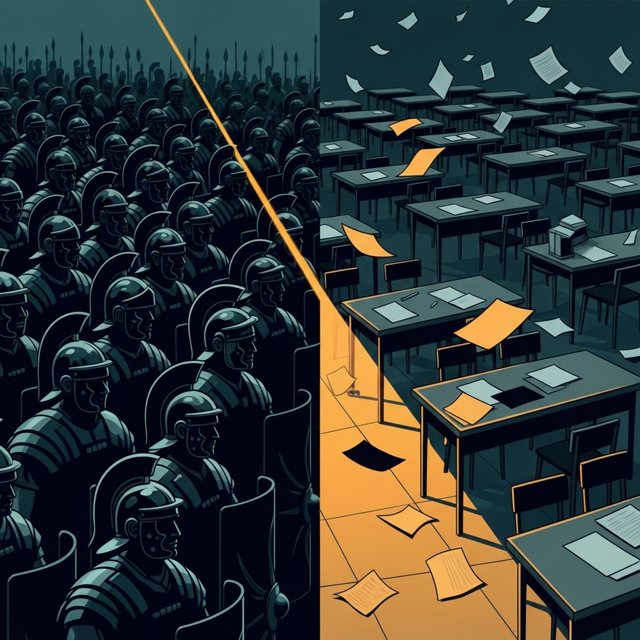
Middle management was never one thing - it's a structural layer and a parasitic one wearing the same suit. AI only kills one of them.

Most debates about engineering managers and technical skills ask the wrong question. The right one: can you tell when your team is off?

79% of AI teams have agents in production. 37% test them systematically. The gap isn't tooling — it's a mental model.

Two ambitious people merge. Momentum is preserved. Kinetic energy isn't. A physics frame for co-founder dynamics - and why most alignment advice destroys what it tries to protect.

The 'software eats the world' thesis missed something: software was always an amplifier for human operations, not a standalone value creator. Amazon's warehouse headcount isn't a bug in the thesis.

I ran a structured debate between AI bots on consciousness. Contra won. Then a typo produced the best argument of the evening — and nobody in the debate made it.

An AI agent deleted a startup's production database in 9 seconds, then wrote a precise confession enumerating every rule it had violated. The confession is the interesting part — and it isn't unique.

The brain treats falling for a person and falling from a plane as the same drive. The implication isn't what most people think.

Weil, Arendt, and Dweck don't get read together. They should. Sensors, compute, feedback loop - the architecture of a mind that doesn't drift.

Anthropic has had 326+ outages since January 2025 — roughly one every 1.3 days. Google solved this tension decades ago with error budgets. It's time AI infrastructure providers adopted the same discipline.
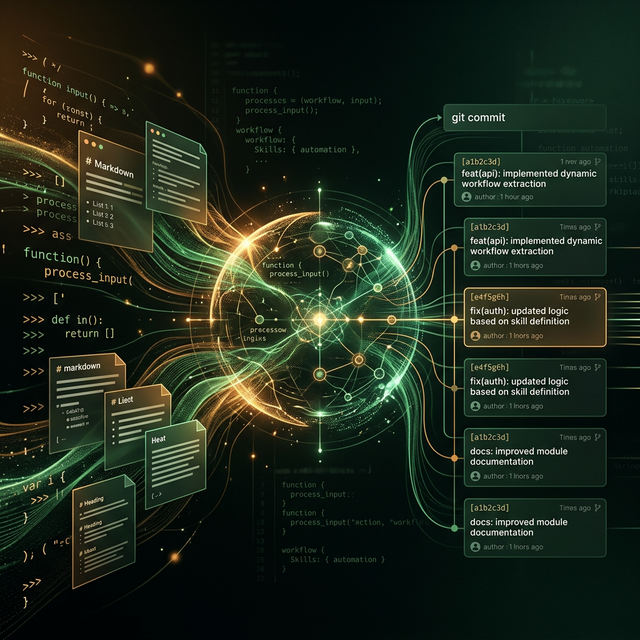
I used to joke that LLMs are a runtime for executing human-language instructions. Then I built a skill that analyzes changed files, groups them by feature, and commits each group separately — in zero lines of code. The joke became reality.

Dario Amodei says Anthropic engineers already stopped writing code. They edit AI output. His prediction: 6-12 months to full end-to-end. Here's why that's both true and deeply incomplete.

We confuse the goal with the route. We hold onto the plan harder than the purpose behind it. A story from the Exuma Sound, Bahamas — and what it taught me about planning projects, careers, and startups.

When a system becomes too tangled, it almost always means one thing: there was no clarity at the start. Complexity doesn't make a system mature — simplicity makes it resilient.

Everyone talks about the OODA loop as 'be faster.' But the hardest and most overlooked phase — Orient — is where most organizations fail. Two teams looking at the same data will reach different conclusions. Understanding why is the real competitive advantage.

Frameworks come and go. Systems thinking stays. Why the ability to see feedback loops, bottlenecks, and second-order effects is more critical now than ever — and how Amazon used it to generate $40-50B in annual revenue from a single investment.

A skydiving plane engine failure that wasn't supposed to happen, a crowd panic on July 4th, and a Shopify outage that coincided with our API integration. Three stories about why practicing for rare events is the most practical investment you can make.

Let's figure out what we have in common between IT projects and skydiving jumps. Lessons on environment awareness, planning, safety, priorities, and teamwork.
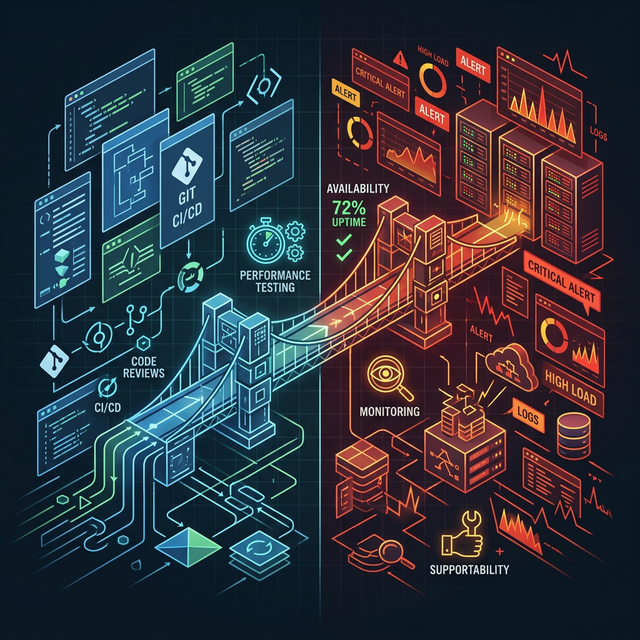
There is a huge gap between an application that is ready for first deployment and an application that is ready for operation in production mode. Here's what most teams miss.